Origin of "The Eye"
Sherlock Holmes and Dick Tracy, Quincy and Kojak: Popular culture is stuffed with images of the tireless detective, gumshoeing his way into danger and intrigue.
But those fictional sleuths have nothing over the world’s first real private detective, Allan Pinkerton.
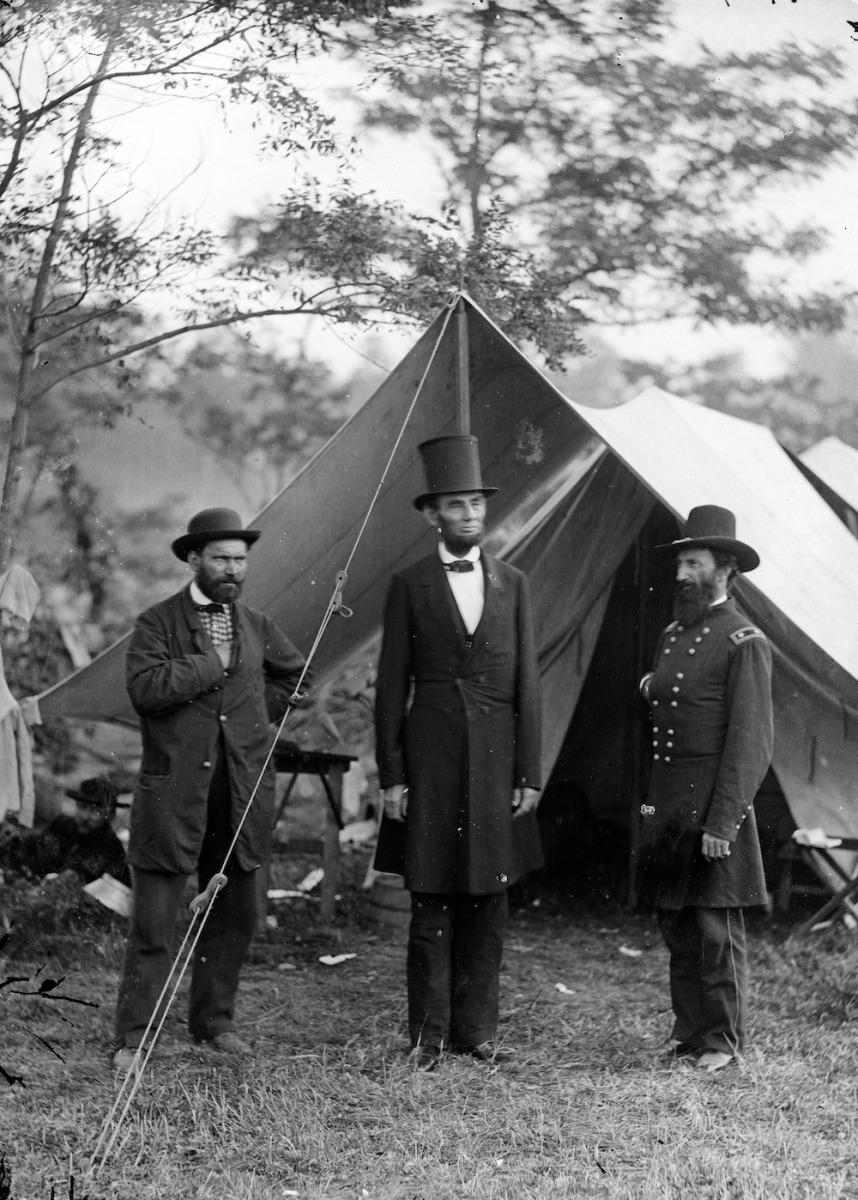
If the last name sounds familiar, it should: Pinkerton, a Scotsman who immigrated to the United States in 1842, built a world-famous detective agency that foiled an assassination attempt on Abraham Lincoln, tracked the railroad-robbing outlaw Jesse James (albeit unsuccessfully), and perfected now widespread surveillance techniques such as the use of undercover agents.
The company’s logo was a wide-open eye with the words “We never sleep.” And, according to one account, that eye was inspired by a Mastiff named Argus, whose namesake was the hundred-eyed giant from Greek mythology.
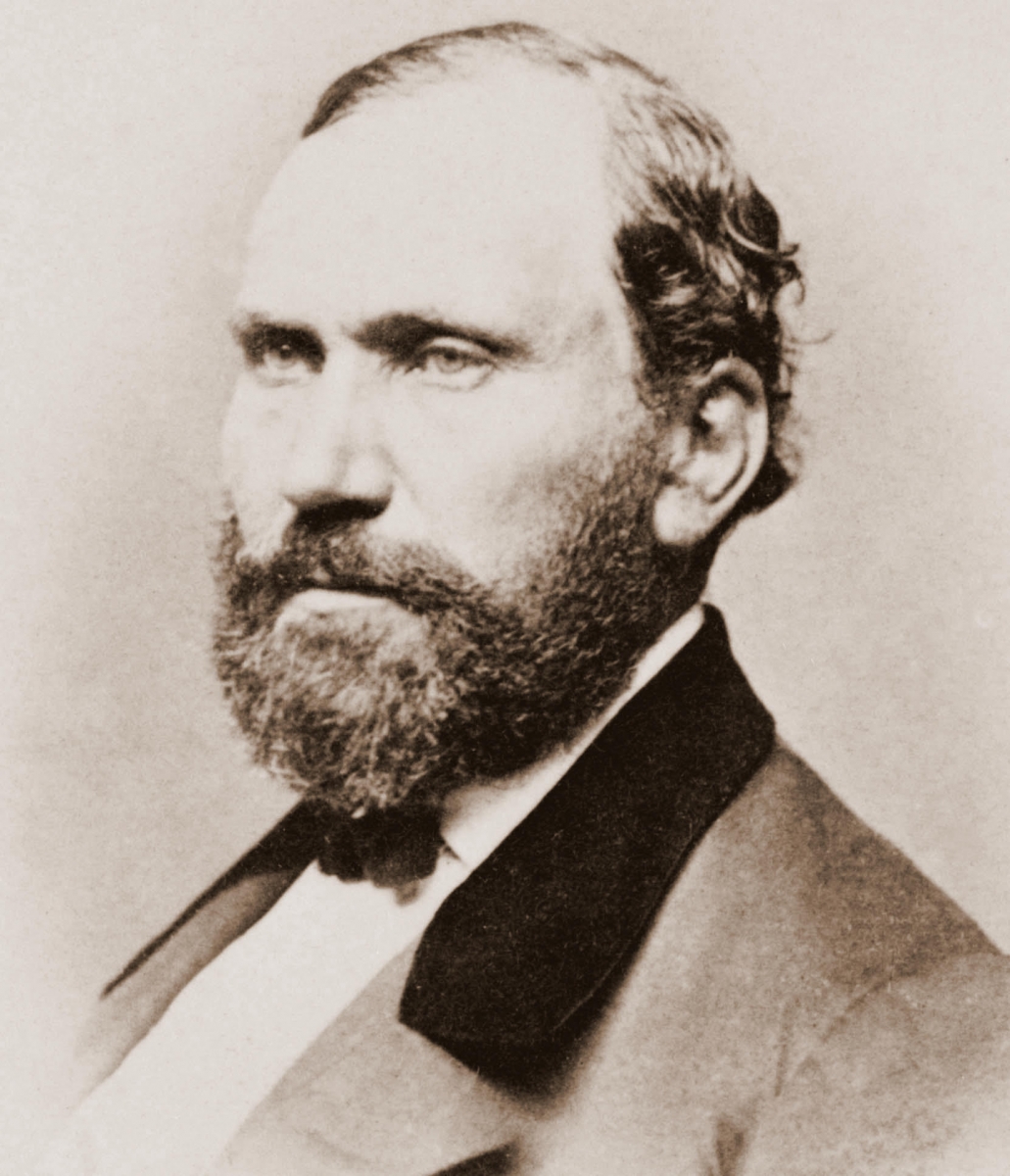
Allan Pinkerton (above), and his company “eye” logo (below).
Most accounts of Pinkerton’s life say he launched his career as a crime-buster after stumbling across a band of counterfeiters. But in the November 1944 issue of the American Kennel Club Gazette, writer Jones Wood tells a different story that he acknowledged might be just that – a well-embellished yarn. Still, he says, the tale of Pinkerton’s Mastiff-fueled beginnings was reportedly recounted by Illinois cavalrymen as they warmed themselves over crackling fires at Civil War encampments. “Pinkerton never told it,” Wood admitted. “But he never denied it.”
As Wood tells it, after arriving in his new country, Pinkerton set down roots in the Scottish-immigrant town of Dundee, Illinois, about 50 miles northwest of Chicago in the Fox River Valley, and still at the time something of a frontier outpost. Pinkerton built a cabin and set out his shingle as a cooper, or barrel maker.
The horse trade flourished in Dundee and nearby towns, providing draft, harness and courier horses for traders and travelers. And with it came an equally brisk business in horse theft.
Uninterested in all these equine dealings, “Pinkerton was busy making barrels,” Wood wrote. “At his feet as he worked lay Argus, the powerful, big-boned Mastiff, his head pillowed on his paw, one eye closed in slumber, the other alertly awake. Regularly a visitor passed to tack a stolen-horse poster on Pinkerton’s shop door. Now and then the man recovered a horse and claimed a reward. He was a professional. Tracking stolen horses was his livelihood. The fur on Argus’ spine used to stir at each such stranger’s approach. Pinkerton kept on making barrels.”
One evening, as Pinkerton slumbered, he was nuzzled awake by his Mastiff, who had heard a strange shuffling sound outside. Though Pinkerton ordered him back to his corner, Argus would not settle, growling and whimpering all night.

A typical Mastiff from the period in which Wood’s article was written.
The next morning, a sleep-deprived Pinkerton noticed tracks crossing his kitchen garden, whose soil was enriched with the addition of sheep manure – Pinkerton was the only one of his neighbors who used it as fertilizer, in keeping with Scottish tradition. Examining the strange pattern in the dirt, Pinkerton concluded that it had been made by horses whose hooves had been covered in sacking, to muffle their footfall. At midday, the professional horse catcher arrived with a new poster, confirming Pinkerton’s theory: A dozen Morgan colts had been stolen from a nearby town.
“While the visitor told the exciting story, Argus circled his feet, sniffing, muttering, swaying his massive head,” Wood continued. “The visitor rode on and Argus paced the shop floor.”